
Blog
Dental hygiene tips for healthy teeth & gums
5 Common Myths About Root Canal Treatment
People share root canal stories again and again, and the fear can grow bigger than the truth. A simple, honest look at common myths about root canal treatment makes things clearer. Fear keeps many from seeking care early. When treatment is delayed, small problems become bigger. This article names five common beliefs, explains what really happens, and gives plain steps to make any visit easier.
Myth One: Root Canals Are Unbearably Painful
This myth comes from an earlier era of dental care. Today, teeth are well numbed before treatment, and most people don’t feel sharp pain during the procedure. What they remember most is the pressure or noise. In fact, the pain many people fear is often from the infected tooth itself. Once treated, that pain usually eases. This is one of the more common myths about root canal procedures that no longer reflects modern care.
Myth Two: Root Canal Treatment Weakens The Tooth
Some people think a tooth doesn’t last long after a root canal. The key part often comes after the root canal itself. After the damaged tissue is removed and the tooth is sealed. After that, it’s restored so it works the way it should. A crown or durable filling adds the strength it needs for daily use. Without that coverage, it’s easier for cracks to form. This idea that treated teeth are automatically weak is one of the myths about root canals that doesn’t match real outcomes. With basic care and regular checkups, these teeth often hold up for years.
Myth Three: Extraction Is Simpler And Better Than Saving The Tooth
Bad tooth pain makes people want a quick solution. Pulling the tooth can seem like the only fix. What gets ignored is what happens afterwards. A space can lead to shifting teeth and gradual bone loss in the area. You can deal with it later, but it often takes extra appointments and added cost. This side of things is rarely mentioned in myths about root canals. If the tooth doesn’t need to come out, a root canal and crown can usually prevent all of that down the line.
Myth Four: Root Canals Cause Other Illnesses In The Body
This idea comes from years ago, back when dentistry looked very different. The studies behind it aren’t really considered reliable now. Modern research hasn’t shown any clear link between a properly done root canal and illness in other parts of the body. It’s meant to do the opposite, really. The whole point is to remove the infection and seal the canals so bacteria stay contained and can’t move around or spread.
That detail is often missed in myths about root canal treatment. If someone has a medical condition that needs extra care, the dentist checks that first. For most people, fixing the tooth lowers the risk instead of creating new problems.
Myth Five: Root Canals Always Fail Or Need Many Visits
Some cases are straightforward and finish in one visit. Others are more involved and need added steps or a specialist’s care. Teeth may have canals that are narrow or filled with older material. Those details matter. Endodontists train specifically to deal with situations like that, using advanced tools and magnification. This part doesn’t always get mentioned in myths about root canal treatment. With modern imaging and techniques, results today are much more predictable than they once were. Root canals don’t fail as often as people think. Most treated teeth stay healthy long term when they’re cleaned, sealed, and restored the right way.
How The Real Process Works In Plain Terms
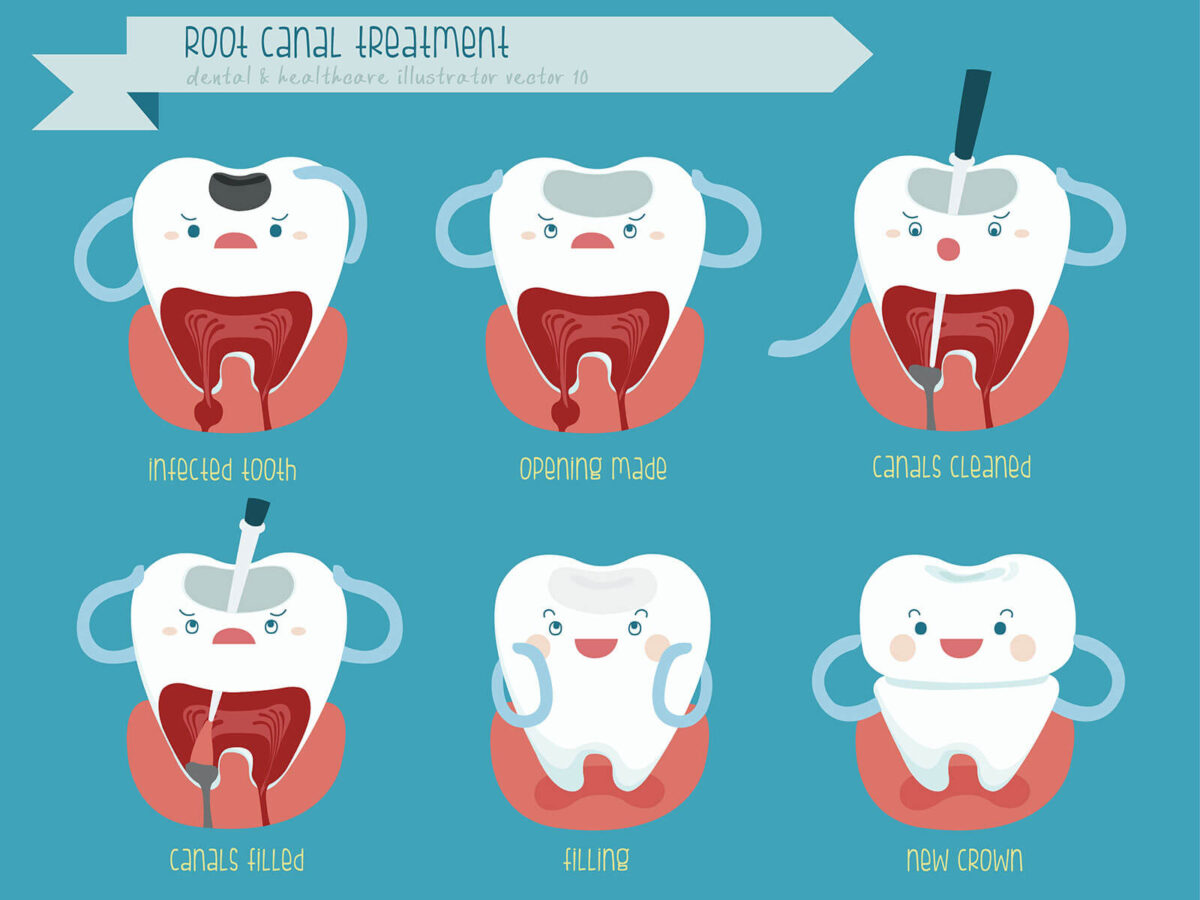
First, there’s an exam, usually an X-ray too, just to understand the problem better. The area gets numbed early on, which is why sharp pain isn’t really part of it. The process starts by opening the tooth and removing the infection within. The canals are then cleaned and protected so bacteria stay away.
When everything settles, a filling or crown helps the tooth function normally again. Nothing fancy. The goal is simply to remove infection, stop the pain, and keep the natural tooth.
Why A Specialist Can Help In Some Cases
When canals are complex or earlier work failed, an endodontist offers extra skill. Magnification, fine instruments, and special imaging allow the specialist to find tiny branches and finish the job. A referral is not a failure. It’s an important part of helping the tooth stay healthy for longer.
When a Tooth Might Need Treatment
Not every warning sign feels serious at first. A tooth can stay sensitive to temperature, or a low ache may drift in and out.
Sometimes there is mild swelling along the gum, or a little pimple that appears for a while and then fades. A tooth that slowly darkens after an injury can be another one. When this happens, it often points to an issue deeper inside the tooth, even if the pain hasn’t really become a big problem yet. That side of it is often overlooked in myths about root canals. A short exam and an X-ray usually help clear things up pretty quickly. Going in early often keeps the treatment simpler and less involved.
Making The Visit Feel A Little Easier
For a lot of people, the worry isn’t really about pain. It comes from how unfamiliar everything feels. When things don’t feel new anymore, the experience often feels different. Clinics today are generally more aware of dental anxiety than they were years ago, even if that doesn’t really match what gets repeated in myths about root canals.
Being heard, not rushed, and knowing you can pause if needed can matter more than you think. After treatment, many people slow down for a day without planning to. Letting the mouth recover at its own pace often helps things start to feel normal again.
Cost And The Long View On Value
Picking a root canal and crown is really about keeping the natural tooth instead of replacing it with something artificial. At first, the cost can look high, and that’s usually the part people notice right away. Over the long run, though, it often costs less than extraction followed by an implant or a bridge. Since insurance plans vary so much, getting a written estimate can make things clearer. Looking beyond the immediate expense and thinking several years ahead helps many people understand the value of keeping their own teeth.
Simple Takeaways That Matter
There are a lot of myths about root canal treatment out there, and most of them didn’t really start recently. A lot of those ideas come from much older times, back when dentistry looked very different from what it does now. Things are handled in another way today, even though the old stories still tend to stick around. When symptoms appear, clear information usually does more than guessing ever does. A calm talk and a clear understanding of the situation can really change how someone feels about what happens afterwards.
Final Thought
Most of the concern people carry is tied to myths about root canals, not what really happens during treatment. Clear information often helps that anxiety fade. Modern treatment is usually practical and well-controlled, with comfort playing a much bigger role than people expect. When pain or warning signs don’t settle, talking it through during a short visit often helps. Understanding the options tends to make the situation feel more manageable.

