
Blog
Dental hygiene tips for healthy teeth & gums
A Closer Look at the Different Types of Dental Implants
Most articles about types of dental implants read like a brochure. Here are your options, here’s what each one looks like, here’s why implants are great. What they don’t cover is how these options actually perform over time, where each one tends to fail, and why the difference between a well-matched implant and a poorly matched one shows up years later rather than immediately.
That’s the part worth understanding before any treatment decision gets made.
Implants have a genuinely strong track record. But “strong track record” covers a range, and that range looks different depending on which type was placed, in which site, in which patient. The different types of dental implants aren’t interchangeable. Their risk profiles aren’t either.
TL;DR
- Five dental implant options exist because no single design works for every jaw. Endosteal is the standard. The other four fill in where it can’t.
- The failure pattern that shows up most across all types is peri-implantitis, an infection around the implant that develops years after placement and often without obvious symptoms.
- A poorly matched implant doesn’t fail immediately. It fails at the five- or ten-year mark, which is why the initial evaluation matters more than most patients realize.
- The question isn’t just which implant works. It’s which one is least likely to cause problems in your specific jaw, years from now.
1. Endosteal Implants: The Benchmark for All Types of Dental Implants
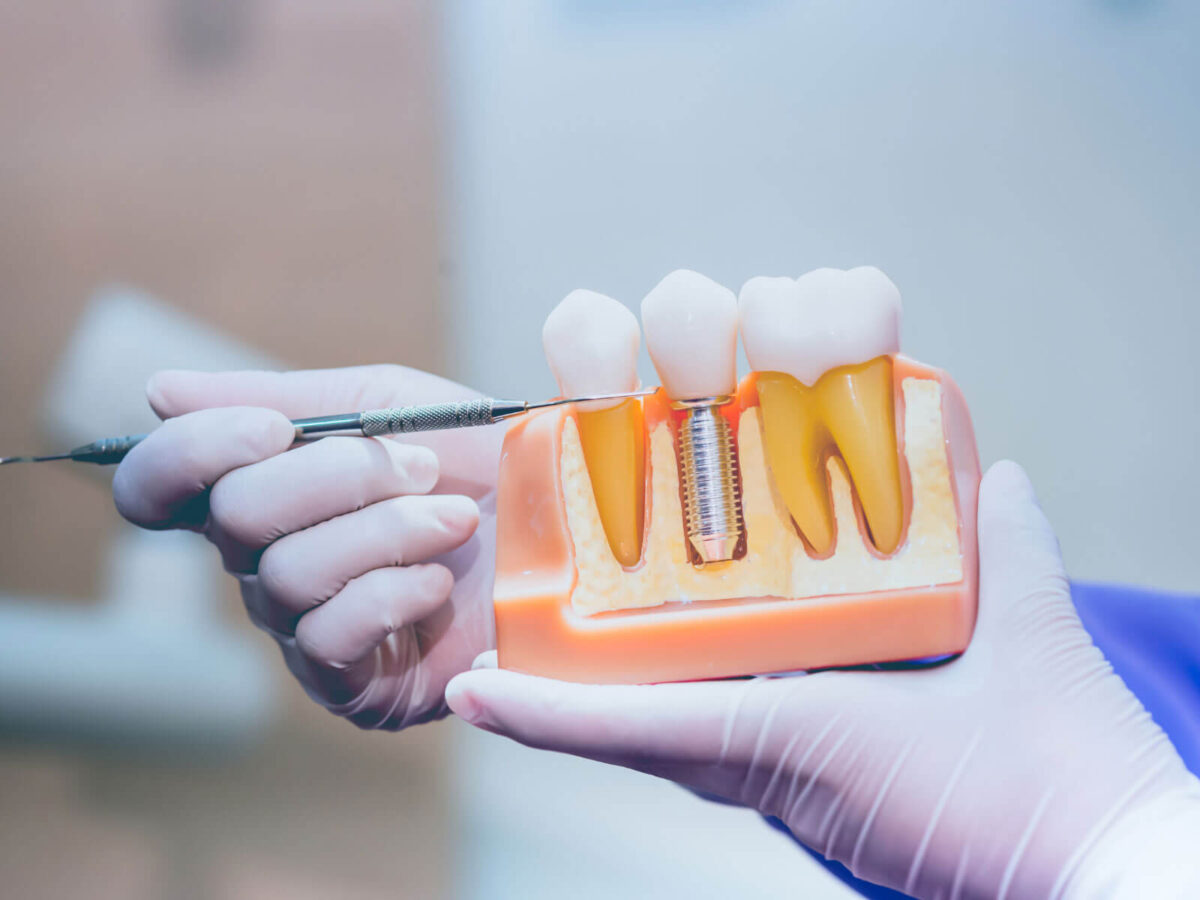
When patients say they want an implant, this is what they mean without knowing it. A titanium post into the jawbone, a crown on top, and more long-term data behind it than any other design.
A 2022 systematic review via NIH put ten-year survival rates above 94%. That’s a number most dental restorations don’t reach.
What surprises most patients is peri-implantitis. By the time it shows up on an X-ray, it’s been developing for a while with nothing to feel. A large-scale European study found it affected roughly 22% of implant patients over ten years. By the time it shows on an X-ray, the bone loss has usually been happening for a while.
Osseointegration failure, where the implant doesn’t bond with the bone, tends to show up in the first few months. Uncontrolled diabetes, smoking, and low bone density at the site are the factors I see most consistently when it happens.
2. Subperiosteal Implants: The Dental Implant Option With the Most Complicated History
Most patients haven’t heard of subperiosteal implants, and most never need to. Rather than going into the bone, a metal framework sits on top of it under the gum, with posts coming through the tissue to support the prosthetic.
Before bone grafting was reliable, patients who had lost too much bone didn’t have many choices. This was often what made implants possible at all. The data that accumulated from those years wasn’t encouraging. Fit degraded as the bone continued to resorb, infection rates were higher than with endosteal, and revision was complicated.
Modern versions use CT-guided custom fabrication, which has improved fit considerably. They still have a place, but a specific one. When grafting isn’t possible and endosteal is off the table, subperiosteal keeps implants available. It shouldn’t be the first conversation when other paths exist.
3. Mini Implants: Where Types of Teeth Implants Get Oversold Most Consistently
The selling point is simple: smaller diameter, less bone, lower cost, faster placement. That combination markets well, which is exactly why they get recommended in situations where they probably shouldn’t be.
Their appropriate uses are legitimate. Stabilizing a lower denture, temporary orthodontic anchorage, replacing small teeth where a standard diameter won’t fit. A review in the International Journal of Oral and Maxillofacial Implants found higher failure rates when they were used for single-tooth replacement outside those indications.
I have this conversation regularly. Patients come in having decided mini implants are the smarter financial choice. Sometimes they are. Often the math looks different once revision is on the table.
Wondering Which Implant Type Actually Fits Your Situation?
The risk profile matters as much as the price. Get evaluated properly.
4. Zygomatic Implants: The Highest-Stakes of All Different Types of Dental Implants
Zygomatic implants anchor in the cheekbone rather than the jaw. They exist for one clinical scenario: severe maxillary bone loss where nothing else can be placed.
A 2019 systematic review via NIH reported survival rates above 96% over five years. The survival data hold up well given the complexity of the cases they’re used in.
The risk profile is different from any other implant type. The surgical approach is significantly more involved. The two complications I make sure patients understand before going this route are sinusitis, since the implant path runs close to or through the maxillary sinus, and oro-antral communication, which is when an opening forms between the mouth and the sinus cavity.
Neither happens often, but when they do, managing them is more involved than anything that comes up with a standard implant.
Not every practice can place these. I refer patients who need them to surgeons with specific experience in zygomatic placement because the margin for error is narrower than in standard implant surgery.
5. Implant-Supported Overdentures: The Types of Teeth Implants That Change Long-Term Bone Outcomes
The patients I see asking about overdentures usually come in with a specific complaint. The denture moves. It lifts when they eat something firm. They’ve been managing it with adhesive for years, and they’re done with that. An overdenture clips onto two to four implants. It still comes out for cleaning, but it doesn’t move around during the day the way a conventional denture does.
What I find myself explaining most is the bone. A conventional denture sits on top of the gum and doesn’t do anything to slow the bone loss underneath it. The ADA confirms that implant-supported prosthetics change that by putting functional load back into the bone. Most patients don’t realize how much that matters until I show them what the jaw looks like on a scan after years of conventional denture wear.
The main maintenance issue is the attachment mechanism. The clips that connect the denture to the implants wear over time. Patients who aren’t told this in advance sometimes think the implants are failing. They’re not. In my experience, the implants outlast the attachments.
FAQ
I keep seeing different implant names – what actually are all the options?
Endosteal, subperiosteal, mini, zygomatic, and implant-supported overdentures. I go through all five with patients because knowing the options is one thing — understanding why you’re getting a specific one is another.
Which type of dental implant lasts longest?
Endosteal has the most data behind it. Above 94% survival at ten years in well-selected patients. Zygomatic numbers are similar, but the starting point is much more complicated, so the comparison isn’t straightforward.
My dentist mentioned something called peri-implantitis – what is that?
Most patients haven’t heard of it before their consultation. It’s a bacterial infection that builds up around the implant over years, usually with no pain, until it shows up as bone loss on an X-ray.
Are mini implants as reliable as standard implants?
In the situations they’re designed for, yes. The problems start when they get recommended as a cheaper version of something a standard implant would do better. That’s when the ten-year outcomes look different.
Conclusion
The range of types of dental implants available now covers situations that simply couldn’t be treated with implants twenty years ago. That’s real progress.
What the standard overview of this topic leaves out is that each type has a specific failure profile. Endosteal fails from peri-implantitis and osseointegration issues. Subperiosteal degrades as the underlying bone changes. Mini implants underperform outside their indicated uses. Zygomatic implants carry surgical risks specific to their approach. Overdentures need ongoing attachment maintenance.
None of that makes implants a poor choice. For Jasper patients looking at dental implant options, it makes the evaluation, the scan, the bone assessment, the medical history, the part that actually determines whether the outcome holds up long term.
Want to Know the Real Risk Profile for Your Case?
A proper evaluation looks at more than which implant fits. It looks at whether it will last.

