
Blog
Dental hygiene tips for healthy teeth & gums
Cavity vs Stain: How to Tell the Difference
What Makes Cavity Vs Stain Tooth Confusing
A dark spot on a tooth does not always reveal its cause right away. In some cases, it may simply be a stain. In others, it could be an early sign of something happening beneath the surface. This uncertainty is what makes cavity vs stain a common concern.
It usually shows up when you are brushing or just while you check your teeth in the mirror. The spot is small, and since it does not hurt, it does not feel like anything is wrong at first. Even then, it raises a quiet question. Is it just surface discoloration, or is there early damage developing underneath?
The difficulty is that both can appear quite similar in the early stages. Color alone does not always provide a clear answer. This is where knowing tooth stain vs cavity helps. It makes the next step easier to figure out.
As the American Dental Association points out, tooth discolouration can have different causes. Some marks stay on the surface, while others begin inside the tooth. Since the treatment is different, spotting cavity versus stain early can make a real difference.
What A Tooth Stain Usually Looks Like
A stain forms on the outer part of the tooth and takes time to become noticeable. It is often linked to things like coffee and tea. Smoking or certain foods that slowly leave colour behind are also associated with it. The color can vary, from light yellow to a deeper brown.
It can look different, but it still feels smooth. Nothing really changes when you touch it. Nothing rough. That is usually the case with a stain. It does not go deeper or damage the tooth. When you think about tooth stain vs cavity, this is one thing people notice.
What A Cavity Tends To Look And Feel Like
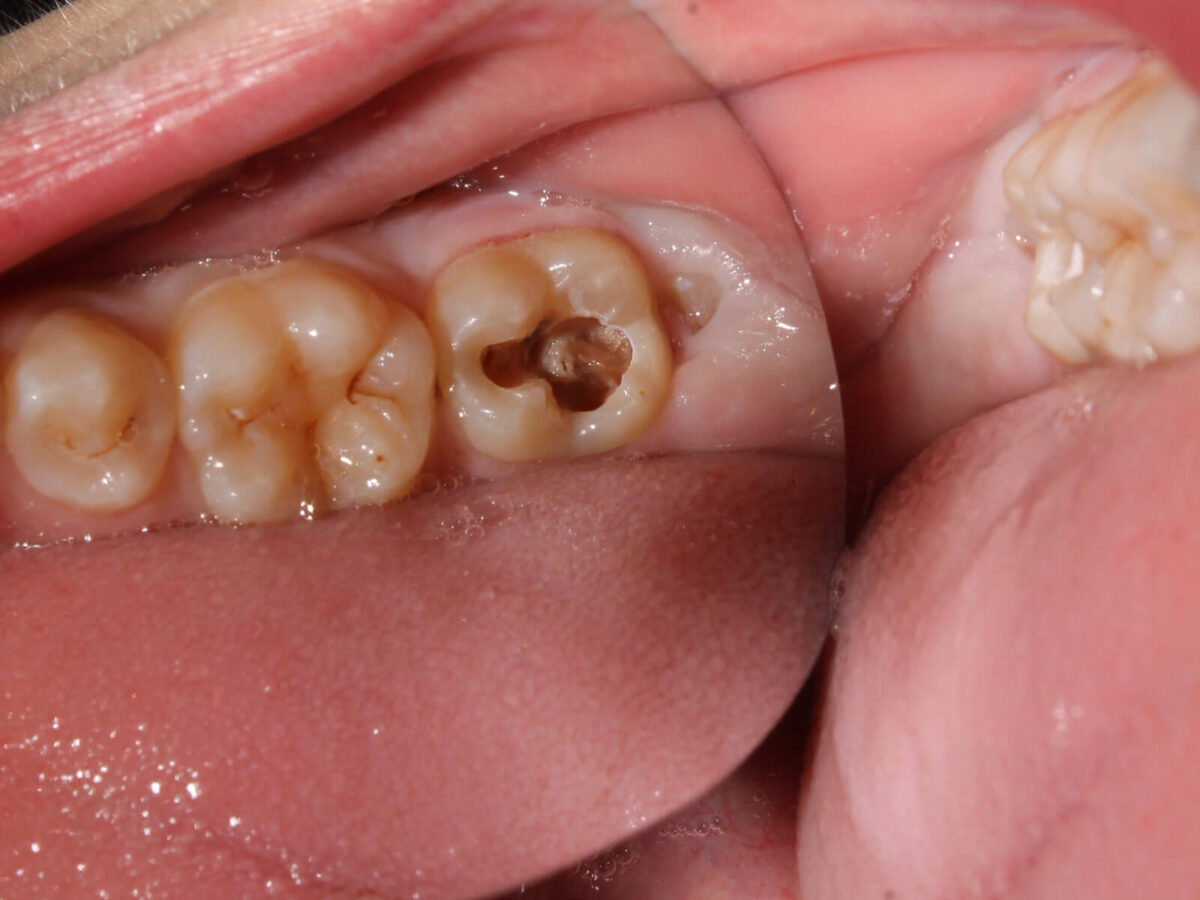
A cavity is a different situation altogether. It means there is some damage to the tooth, even if you cannot see it clearly at first. It usually starts slowly. At the beginning, it can look like a stain, so it often gets ignored. But there are small signs. The area may feel slightly rough, and as it progresses, a tiny hole may start to form. This is where cavity versus stain becomes clearer. One stays on the surface, while the other affects the tooth itself.
Why Colour Does Not Always Tell Everything
The first thing people notice is usually the color. Dark seems worrying; lighter feels fine. But that can be off. Some stains look dark without being a problem. At the same time, early cavities can look pale or chalky and go unnoticed. That is why color alone does not explain cavity vs stain. It gives you a rough idea, not a clear answer. You also look at how the surface feels and whether there is any sensitivity.
How Sensitivity Can Help Identify The Difference
Sometimes you do not notice anything until the tooth feels sensitive. That is when it crosses your mind that it could be a cavity. It does not always mean much on its own. But when cold drinks or sweets start to feel sharp, something may be going on with the outer layer of the tooth. The feeling can hang around for a few seconds.
With stains, this kind of feeling is usually absent. The tooth might look off, but it often does not feel any different. That is one way people try to judge tooth stain vs cavity day to day. Still, no sensitivity does not always mean the tooth is fine, since early decay can stay hidden.
What the Location Of The Spot Can Tell You
Where the spot appears can offer clues. Stains often show up on flat areas or spots that come into contact with food and drinks. Front teeth are common locations. Cavities tend to develop in areas where plaque collects. Between teeth. Along the gumline. In grooves on the chewing surfaces. These patterns help distinguish cavity versus stain in a more practical way. The location often reflects how the problem developed.
Why Cavities Progress But Stains Do Not
A stain stays on the surface. It might darken with time. But it does not go deeper into the tooth.
A cavity is different. It does not stay the same and can get worse if left alone. Over time, it can go deeper into the tooth. This is one of the main differences in cavity vs stain. What seems small at first does not always stay that way. That is why it helps to notice it early.
How Dentists Confirm The Difference
A quick look is not the only thing dentists depend on. They also feel the surface, check the area carefully, and may take an X-ray if needed. This helps them see what cannot be seen from the outside. It shows whether the issue has reached deeper parts of the tooth. That removes the uncertainty. It becomes easier to tell if it is a stain or a cavity. This kind of check gives more clarity than just observing it.
What Treatment Looks Like For Each Condition
It really comes down to what you are dealing with. Stains are usually managed with cleaning or whitening to fix how the tooth looks. Cavities are different. The damaged part is cleared out. The tooth is then restored with a filling. That is why understanding tooth stain vs cavity matters. You cannot treat them the same way and expect results.
Why This Difference Should Not Be Ignored
A dark spot can seem harmless at first, so it is often taken as just a stain. That assumption does not always help. If it is actually a cavity, the problem can grow over time. What could have been a small treatment may become more involved later. On the other side, taking a stain too seriously can lead to unnecessary concern. This is where knowing cavity versus stain makes things clearer.
What To Do When You See A Dark Spot
It is easy to ignore a small spot, but guessing rarely helps. If it stays and does not go away, getting it checked is a better option. Even if it turns out to be minor, at least you know where you stand. A dentist can figure out the cause fairly quickly. When looked at early, treatment is usually more straightforward and less stressful. This matters even more when dealing with cavity vs stain, since it is not always clear just by looking at it.
FAQs
Cavity vs Stain – What’s the difference?
A stain affects only the outside. But a cavity goes deeper into the tooth.
Can I figure it out myself?
Only to some extent. A smooth spot may be a stain. If it feels off or sensitive, it might not be.
Do they look the same?
Sometimes they do, especially in the beginning, which is why it gets confusing.
Is a dark spot always a problem?
Not always. If it does not go away or starts to look different, it is better to get it checked.
Conclusion
A small spot on a tooth isn’t something that people take seriously. Nothing hurts, nothing feels different. Still, it can stay in your mind. You wonder what it actually is. Just a stain, or something starting underneath? That is where understanding cavity vs stain helps. It takes away some of that uncertainty and makes it easier to figure out whether to wait or get it checked.
Call To Action
If something on your tooth does not seem right, do not ignore it. If it is not going away, it is better to get it looked at. Understanding tooth stain vs cavity helps. It makes things a little clearer.

